Nothing to talk about with your partner? What to do tonight

It's 7:40pm. Dinner's done, the plates are stacked on the bench, and you're both on the couch with a phone each. You have nothing to talk about with your partner, and the silence has started to feel like it means something. It doesn't have to. It does mean something needs to change, and that change can be small enough to try tonight.
Nothing to talk about with your partner: why it happens
Conversation dries up when the reasons to start it do. Somewhere in year two or five or twelve, your conversations turned into logistics. Who's picking up the kids, what's for dinner, did the bin go out, is the car due for a service. You know each other's week to the minute and have no idea what's actually on their mind.
Then the assumptions pile on. You figure you've heard all their stories. They figure you're tired and wouldn't want to be asked. Nobody asks, so nothing new comes out, so there's still nothing to talk about. It's a loop, and it feeds itself. The longer it runs, the bigger the first question feels, which is why people put it off for another week, then another month.
Phones make the loop easy to stay in. A phone is always more interesting than the question you haven't thought of yet, and it never makes you feel awkward. That last part matters more than it sounds, as the next section explains.
What the research says about going deeper
The reason most of us stay on the surface is a prediction, and the prediction is wrong. Michael Kardas, Amit Kumar and Nicholas Epley ran 12 experiments with more than 1,800 participants, published in the Journal of Personality and Social Psychology in 2021. Pairs of people, mainly strangers, talked about either deep or shallow topics. Before they started, they guessed how awkward it would be.
The people who got the deep questions overestimated the awkwardness the most. Afterwards, they reported more enjoyment and more connection than the shallow-conversation group. In one experiment, people who had a deep conversation and a shallow one expected to prefer the shallow one, then preferred the deep one. The researchers also found that people consistently underestimated how interested their partner would be in learning about them.
Our participants' expectations about deeper conversations were not woefully misguided, but they were reliably miscalibrated.
— Nicholas Epley, University of Chicago Booth School of Business, 2021
Read that as it applies to your couch. Your partner is probably more curious about you than you think. You are probably more curious about them than you've shown. The dread of a weird silence is bigger than the weird silence.
What the study can't show: most of those pairs were strangers, not two people with years of habit between them. A new question is also easier to ask someone you've just met, because you have no history of skipping it. With a partner, the first deep question after a long flat patch can feel louder than it is. Expect that, and ask anyway.
Start with one question, not forty-five minutes
You may have seen the famous 36 questions. They come from Arthur Aron and colleagues (1997, Personality and Social Psychology Bulletin). Unacquainted pairs who asked each other 36 increasingly personal questions, in three sets of 12, over 45 minutes, reported a bigger jump in closeness than pairs who were given small-talk questions. Questions like "What would constitute a 'perfect' day for you?" and "Is there something that you've dreamed of doing for a long time? Why haven't you done it?"
Forty-five minutes is a lot to ask of a Tuesday. The study also used unacquainted pairs, so it shows structured questions can build closeness fast between people who've just met. It can't tell you whether they'll fix a long-term pattern. The useful part is the shape of it: questions that get a little more personal each time, with both people taking turns to answer.
So shrink it. One question. Ten minutes. Both of you answer.
Five things to try this week
1. Ask about the part of the week they're dreading
"What's the bit of this week you're not looking forward to?" You'll get a real answer, because everyone has one. It also tells you where they could use backup.
2. Swap "how was your day" for a smaller target
"What was the best ten minutes of today?" is hard to answer with "fine". It forces a specific, and specifics are where conversations start.
3. Ask the Aron question about something they've put off
"Is there something you've wanted to do for a long time and haven't?" Then ask why not, and don't solve it. Just ask the next question.
4. Ask about before you
"What did you want to be when you were twelve?" You've probably never asked. Their answer is a story you haven't heard, which is the whole point.
5. Move the phones
Put both phones face-down on the bench, or in another room. Do it before you ask anything. A phone within reach is an easy exit, and most of us take it the first time the conversation slows down.
When they give you a short answer
Sometimes you'll ask something good and get "I dunno, nothing really." That's a normal first result after a long flat patch. It doesn't mean they don't care. It might mean they don't expect you to want the real answer.
Try "say more about that", or "what was that like?", or just "yeah?" and then stop talking. Don't offer your own answer as a way to rescue the moment. If it's still flat, let it go and try again tomorrow with a different question. You're rebuilding a habit, and one evening doesn't do that.
If you're short on questions, I make the Reconnect Deck, which has 150 questions in 3 categories, backed by psychology and research. It's there for the nights when you can't think of one and the phone is looking very tempting. You don't need it to do any of the above, though. A question from this page and a bench with two phones face-down will do.
When a conversation isn't enough
If the flat patch has lasted months, if the silence feels cold, or if every attempt turns into an argument, a couples counsellor can help. That's a good use of an hour. If this sounds like your house, my piece on what to do when your relationship feels like a roommate situation goes further, and how to reconnect with your partner when things feel a bit off covers the first steps.
Frequently asked questions
A flat patch is a pattern many couples fall into when routine and phones fill the evenings. I can't give you a number for how common it is, and I won't invent one. A flat patch isn't a diagnosis of the relationship. If it has lasted months and you feel distant, it's worth a proper conversation or a counsellor.
Skip the recap of the day and ask something specific. Try "What was the best ten minutes of today?" or "What's the bit of this week you're not looking forward to?" Specific questions are hard to answer with "fine".
Not by itself. Plenty of couples enjoy a quiet evening. The test is whether both of you feel relaxed in it, or one of you is waiting for the other to start. If it's the second, try one question with the phones put away.
Keep it small and take turns. Kardas, Kumar and Epley (2021) found people expect deep conversations to be more awkward than they turn out to be, so the weirdness you're bracing for is usually bigger than the real thing. Ask one question, answer it yourself afterwards, and stop at ten minutes.
Keep the conversation going
Choose your Pakk
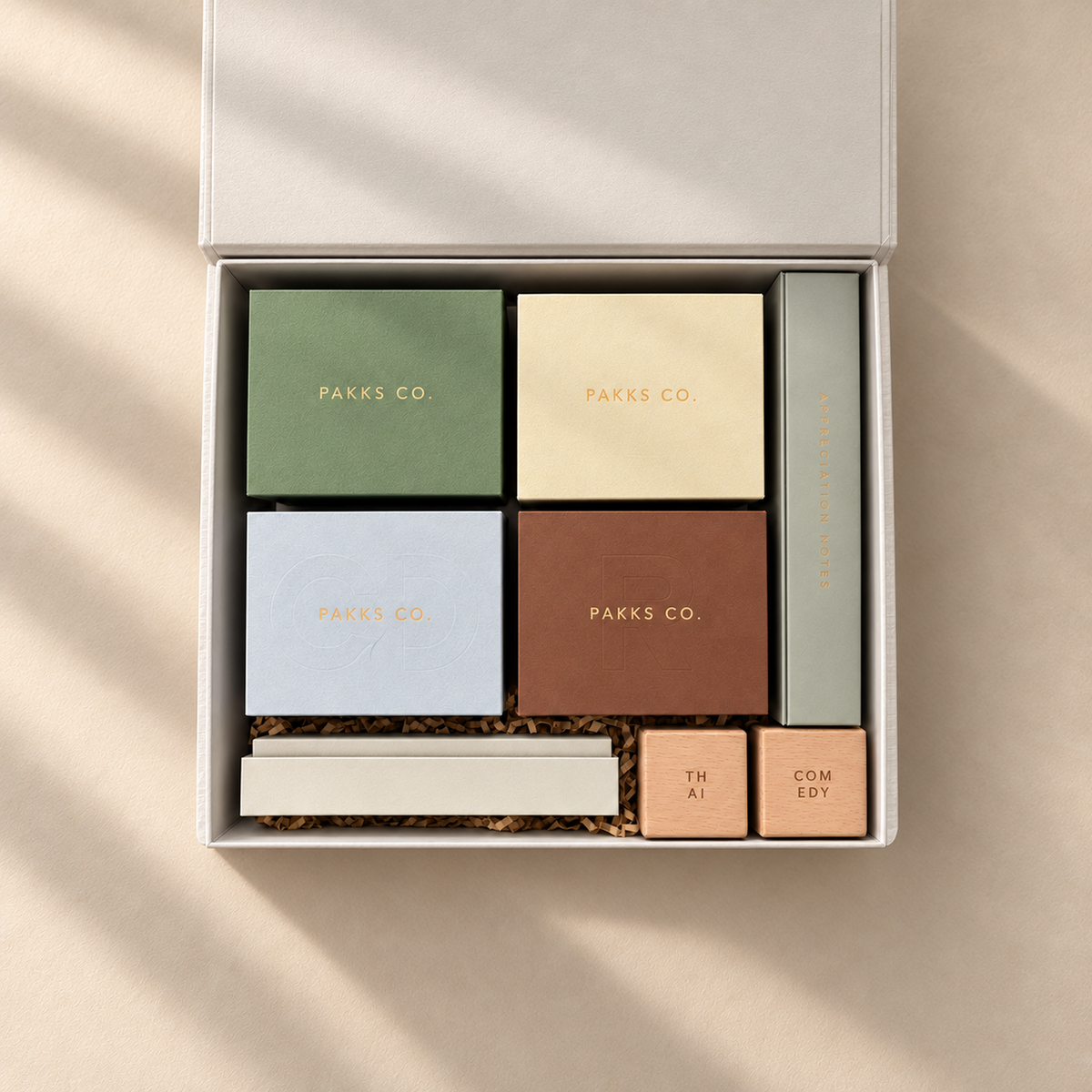
Conversation decks plus little extras, chosen for your stage. Pick a Mini, an Original, or have it all with the Ultimate.
Shop the Pakks