Shared awe in a relationship: what a 2026 study of 504 people found
It's 9:15pm on a Tuesday. The dishwasher's running, your partner's on one end of the couch, you're on the other, and you're both watching something you'll have forgotten by Thursday. You like each other. Nothing's wrong. You just can't remember the last time you both looked at something and went "whoa" at the same moment.
A study published in 2026 suggests that moment might matter more than a good night out. The researchers were looking at shared awe in a relationship, and what they found is worth knowing if your relationship is in good shape and you'd like to keep it that way.
What the shared awe in a relationship study found
Matteo Perini, Lou Mier, Hein van Schie, Jasper de Groot and Johan Karremans ran two online studies, published in The Journal of Positive Psychology in 2026. The first had 198 adults who were in love and reported high passionate love. The second had 306 adults in relationships, with no requirement to be head over heels.
In the first study, awe that people felt together with their partner predicted relationship satisfaction, passionate love and what psychologists call self-other overlap, which is how much you feel your partner is part of you. When the researchers added each person's general tendency to feel awe, only the shared kind kept predicting good outcomes.
In the second study, shared awe predicted satisfaction even after the researchers accounted for shared amusement and for how often couples did awe-type activities. So it wasn't just "couples who laugh together are happier" and it wasn't just "couples who go to lookouts a lot are happier". The awe itself, felt side by side, carried something extra.
The strongest pathway ran through what the authors call relationship flourishing. Shared awe also tracked with feeling closer and with willingness to sacrifice for your partner. Perini told PsyPost that shared awe alone accounted for about half of the variance in flourishing in the second study.
Awe may be especially beneficial for a relationship when it becomes something partners share.
— Matteo Perini, as quoted by PsyPost, 2026
What this study can't tell you
Both studies were cross-sectional and based on self-report, which means people answered questionnaires once. Perini was upfront about it: "The biggest caveat is that the two studies in this paper are cross-sectional and rely on self-report."
So the study can't say that sharing awe makes a relationship better. It could run the other way. People who are happy together may simply find their life together more awe-inspiring. Only one partner in each couple answered, too, so you're getting half of each story.
There was one odd result. Once shared awe was counted, a person's general tendency toward awe was linked with lower satisfaction. Perini said he'd treat that cautiously until someone replicates it, and so would I. Please don't read it as "feeling awe alone is bad for you".
How to share awe without booking a holiday
Awe, in the way psychologists use it, is the feeling of being in front of something vast that makes your own to-do list shrink. It doesn't need a mountain. It needs you both to notice the same big thing at the same time, with your phones away.
Go somewhere dark
Drive ten minutes out of town, switch the headlights off and look up. Give your eyes fifteen minutes to adjust before you decide it's boring. You'll see more stars than you expected, and it's hard to scroll when there's nothing to scroll.
Watch the weather
When a proper storm rolls in, turn the lights off and sit on the verandah or at the window. Big weather is free awe, and it arrives with no planning.
Go to something live
A gig, a choir, a small-town fireworks night. Hearing a room of strangers sing the same line is a quick route to the goosebumps feeling.
That last part is where the talking happens. The drive home is a good time to ask what the other one was thinking while they looked up. If you want a push in that direction, the conversation starters in this guide work well in the car.
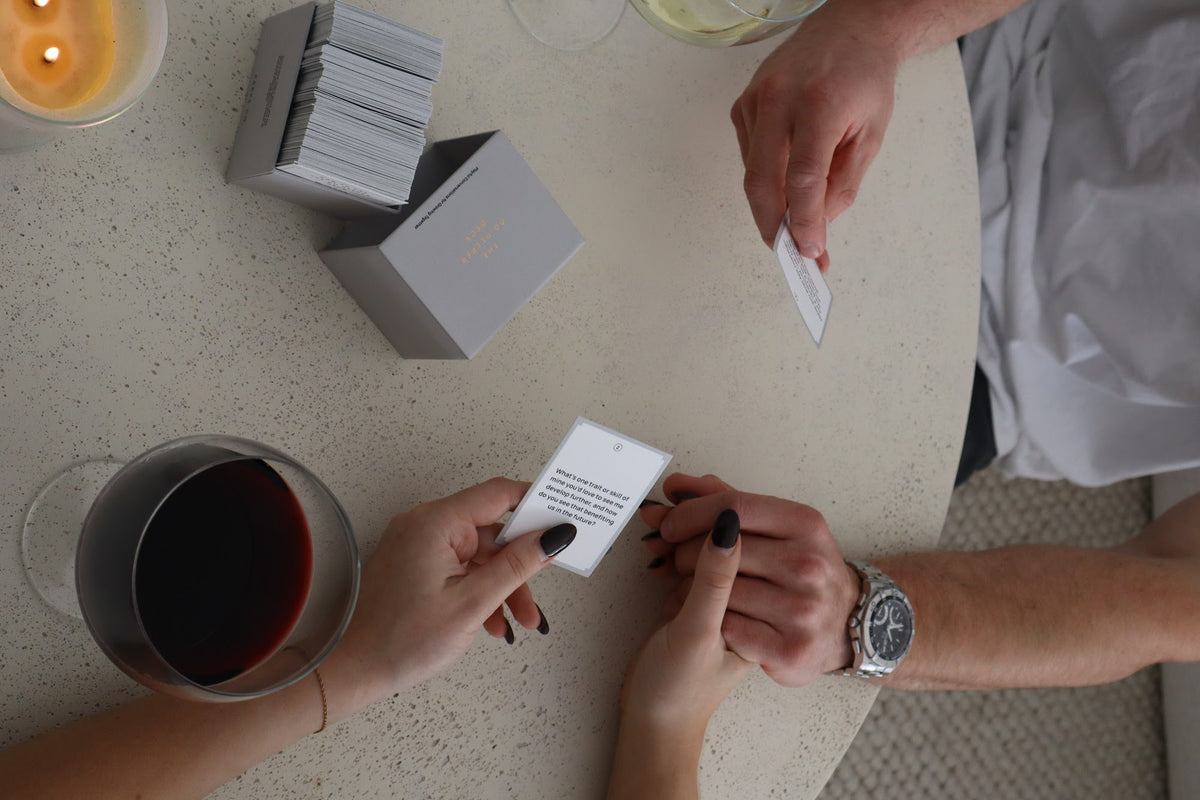
If you'd like something to hold while you do it, I make the Go Deeper Deck, which has 150 questions across 3 categories, backed by psychology and research. It's made for couples who like each other and want to stay curious about each other. You can also do all of the above without it.
Frequently asked questions
The 2026 study found that awe felt together was linked with higher satisfaction, but it was a one-time questionnaire study, so it can't prove cause. Happy couples might simply notice more awe together. It's a reasonable thing to try, and the study doesn't promise results.
Anything that feels vast enough to make you both go quiet for a second: a night sky, a storm, a huge building, live music, a view. It's about the feeling you share, so the scale of the event matters less than both of you being present for it.
In the study, yes. Shared awe predicted relationship satisfaction even after the researchers accounted for shared amusement. Fun still matters, but the study found awe added something on top of it.
The study didn't set a number, and in the second study awe felt together mattered after accounting for how often couples did awe-type activities. Once a month is a manageable place to start, and a sky or a storm costs nothing.
Keep the conversation going
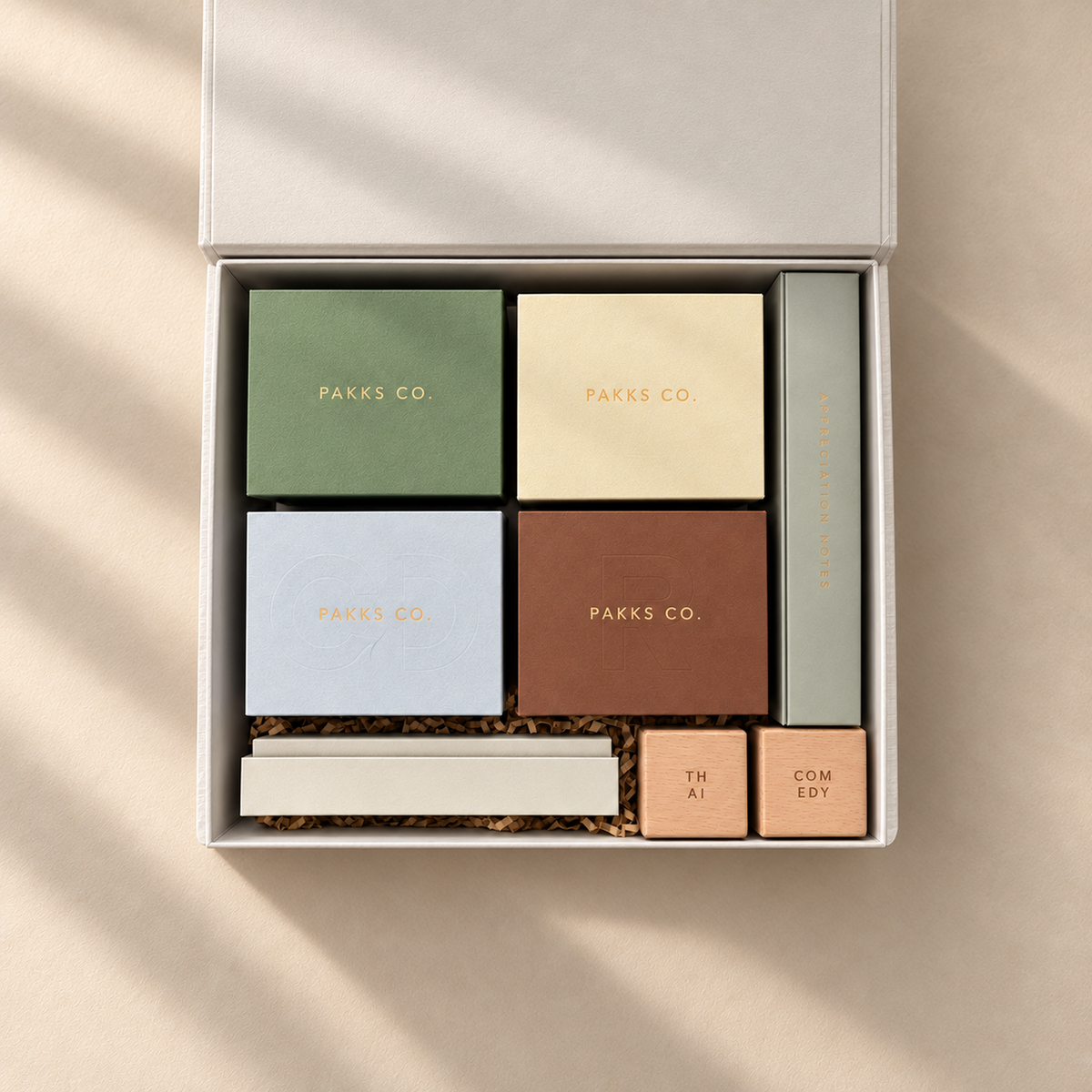
Choose your Pakk
Conversation decks plus little extras, chosen for your stage. Pick a Mini, an Original, or have it all with the Ultimate.
Shop the Pakks