Walking with your partner: what a 2026 study of 1,700 marriages found

Why walking with your partner is worth 20 minutes
It's 7:40pm. Dinner's done, the dishwasher's on, and you're both on the couch with a phone each. You've talked today, sort of. Who's picking up who. Whether the bin went out. What's for dinner tomorrow.
Walking with your partner for 20 minutes after dinner might be the easiest way to get a real conversation back into your day, and there's now a decent study behind it. I read it so you don't have to. It's good news, with a couple of catches I'll be upfront about.
What the 2026 study found
Mildenhall, Núñez and Yorgason (2026) published the research in the journal Family Relations. They used survey answers from nearly 1,700 young married couples who are part of a long-running US study of newlyweds.
They looked at two things: how much each person exercised alone, and how much the couple exercised together. Then they compared both against how well the couple communicates, how they sort out conflict, and how stressed the marriage is.
Exercising alone was linked to a healthier marriage. Exercising together was linked to a healthier marriage more consistently, on all three measures. The strongest link of the three was with communication. Couples who moved together said they listened better and felt more heard.
Two numbers stood out to me. About 60% of the husbands and wives exercised, but only about a third exercised with their spouse. And the most common thing couples did together was walking. No gym, no gear.
While the impact is not necessarily large, it is very consistent.
— Jeremy Yorgason, Brigham Young University, 2026
What the study can't tell you
These couples filled in surveys. Nobody was told to go for walks and then measured afterwards. So the study shows that couples who walk together tend to communicate better. It doesn't prove the walking is what causes it. Couples who already get along probably find it easier to head out the door together in the first place.
They were also newlyweds. If you've been together 15 years, you weren't in the sample.
So I'm not going to tell you a walk will fix anything. I'll tell you it's free, it takes 20 minutes, and the worst outcome is you got some fresh air next to someone you like.
Why your conversations go better on a walk
One of the researchers, Ashlyn Mildenhall, pointed out that walking naturally gives you chances to talk. That makes sense to me.
Think about where you two usually talk. Across the kitchen bench while one of you stirs something. On the couch with the TV on. In bed when you're both wrecked. Every one of those has something competing for your attention.
On a walk, your phone's in your pocket. Nobody can start unloading the dishwasher halfway through your sentence. You're side by side, so the slightly awkward stuff is easier to say because you don't have to hold eye contact while you say it. And it has an end. When you're back at the front door, the conversation can be over, and that makes it less scary to start.
If your evenings have turned into two people sharing a couch, I wrote about that in what to do when your relationship feels like a roommate situation.
How to start walking together tonight
Keep it short and keep it the same
Twenty minutes. Same loop every time, so there's nothing to decide. Out the door, round the block, home. The study didn't set a magic number, so this is my suggestion, and it's short on purpose. You'll do a 20-minute walk on a Tuesday. You won't do an hour.
Phones in pockets
One of you brings a phone in case the kids or the babysitter call. It stays in a pocket. No podcasts, no step count, no photos of the sunset.
Ban the logistics for the first ten minutes
No calendar, no bills, no "did you email the school". You've got the other 23 hours for that. If it comes up, one of you says "after the corner" and you move on.
Bring one question
One. A walk with a list feels like an interview. Try one of these and see where it goes:
- What were the best ten minutes of your day?
- What's something you've been thinking about this week that you haven't said out loud?
- What's one thing you'd like us to do before the end of the year?
If you want more where those came from, I've got a full list of conversation starters for couples.
What if you've got kids and no spare 20 minutes
The researchers said this themselves: couples with kids have to plan for it, because it won't happen by accident.
A few ways to make it fit. Push the pram together. Do a lap of the oval during Saturday sport while the kids are busy. Walk to school drop-off as a pair once a week and take the long way home. It still counts if there's a toddler on someone's shoulders.
Start with one walk this week. Put it in the calendar like you would a dentist appointment, and see what you end up talking about.
Frequently asked questions
A 2026 study of nearly 1,700 young married couples (Mildenhall, Núñez and Yorgason) found that couples who exercised together reported better communication, easier conflict resolution and less marital stress. Walking was the most common shared exercise. The link was small and consistent, and the study can't prove the walking caused it.
The study didn't set a length. I'd start with 20 minutes on the same loop, because it's short enough that you'll do it on a weeknight. A short walk you take three times a week beats a long one you take once a month.
Leave the logistics at home for the first ten minutes and bring one open question, like "what were the best ten minutes of your day?" One question is enough. If it turns into a 20-minute conversation, good. If it doesn't, you still went for a walk together.
Attach it to something that's already happening: walking the dog, getting milk, picking up takeaway on foot. Keep the first few short and don't turn them into a big talk. People say yes to an errand far more easily than to "quality time".
Keep the conversation going
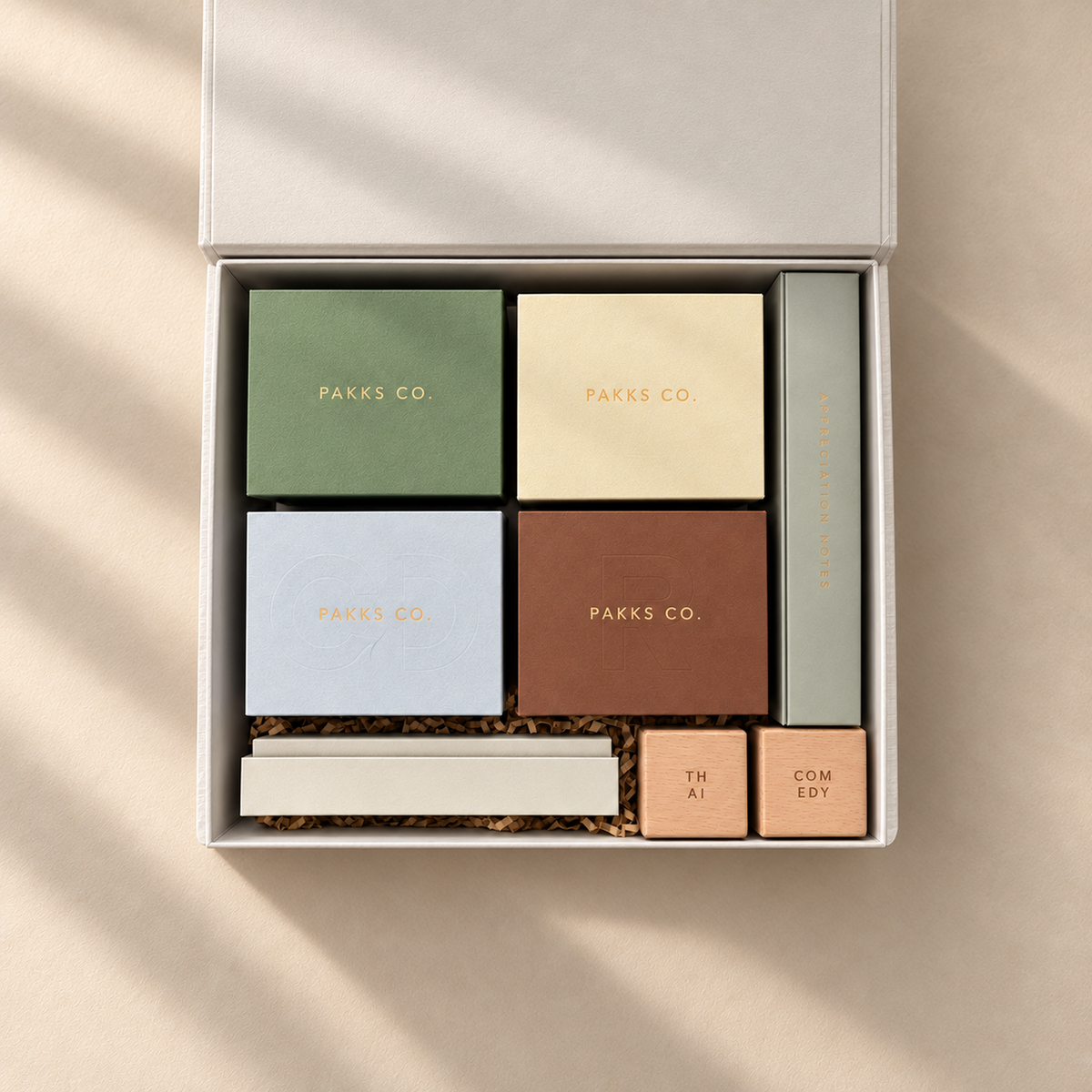
Choose your Pakk
Conversation decks plus little extras, chosen for your stage. Pick a Mini, an Original, or have it all with the Ultimate.
Shop the Pakks