How to show empathy to your partner: what a 2026 study of 190 couples found
Your partner walks in, drops their bag by the door and says, "Long day." You've got about two seconds before you pick a response. You can fix it ("Did you eat?"), match it ("Mine was worse"), or ask one more question and wait. That choice is a big part of how to show empathy to your partner.
This month a research team at the Université de Montréal published a study that puts numbers on a version of that choice. They didn't watch couples at the front door. They asked how much people tune in to their partner, and how satisfied both people were with their sex lives. The habits are further down. The study comes first, because it tells you what to expect.
How to show empathy to your partner: what the researchers measured
The study, by Emmanuelle Maindron, Marianne Emond, Brenda Ramos, Katherine Péloquin and Marie-Ève Daspe, appeared in The Journal of Sex Research in 2026 (DOI 10.1080/00224499.2026.2721604). The details below come from PsyPost's write-up.
The team recruited 190 French-speaking couples in Canada, 380 people in all, through social media ads between July 2021 and August 2022. Everyone was between 18 and 29, with an average age of about 23.5. The couples had been together at least two months and just under three years on average. About 68 percent of participants were heterosexual, and the study was open to monogamous, open and polyamorous couples.
Each person filled in a 13-item questionnaire on what the researchers call dyadic empathy, meaning empathy toward a romantic partner. It covers two things. Perspective-taking is trying to see your partner's side of a disagreement before you decide. Empathic concern is feeling tender and worried when your partner is having a hard time. Each person also rated how satisfying their sex life was, and how much they wanted sex with their partner.
What they found
People who rated themselves higher on empathy toward their partner reported more satisfying sex and stronger desire for that partner. The link with their own satisfaction was small to moderate. The link with their own desire was smaller, and it disappeared when the researchers looked at perspective-taking on its own.
The partner's side is the interesting part. When one person scored higher on empathy, their partner also reported modestly higher sexual satisfaction. Partner desire showed no statistically significant link. In plain terms, tuning in to your partner was linked to both of you being happier with your sex lives, though not to either of you wanting sex more often.
The associations we found were generally small to moderate, suggesting that empathy is one meaningful piece of a much larger picture.
— Emmanuelle Maindron, Université de Montréal, 2026, speaking to PsyPost
What this study can't tell you
It measured everyone once. That means it can't say whether empathy leads to better sex, or whether a good sex life makes people feel warmer toward each other. Both could be true at once.
People rated their own empathy, and how understanding you think you are doesn't always match how understood your partner feels. The study also didn't measure empathy toward people outside the relationship.
These were young adults, mostly in their early twenties and under three years together, so it can't speak for couples fifteen years in. Empathy, relationship length and gender together explained about 14 percent of the differences in satisfaction and 16 percent in desire. Most of what shapes either sits elsewhere, such as stress, sleep and how you feel on the day.
Two ways to practise tonight
Take the study as a nudge to practise the two things it measured. Both are small and free.
Perspective-taking: say their side back
Next time you disagree, say their side back before you answer. "So for you it wasn't about the dishes, it was about being left to sort the whole evening out alone?" Then ask, "Did I get that right?" It takes about 30 seconds. You don't have to agree afterwards. You've just proven you heard it.
Empathic concern: ask one more question than feels needed
When they say "long day," skip the fix for five minutes. Ask what the worst part was. Then ask what they'd have wanted to happen instead. People often want to feel heard first and get solutions later, and you can ask which one they want tonight.
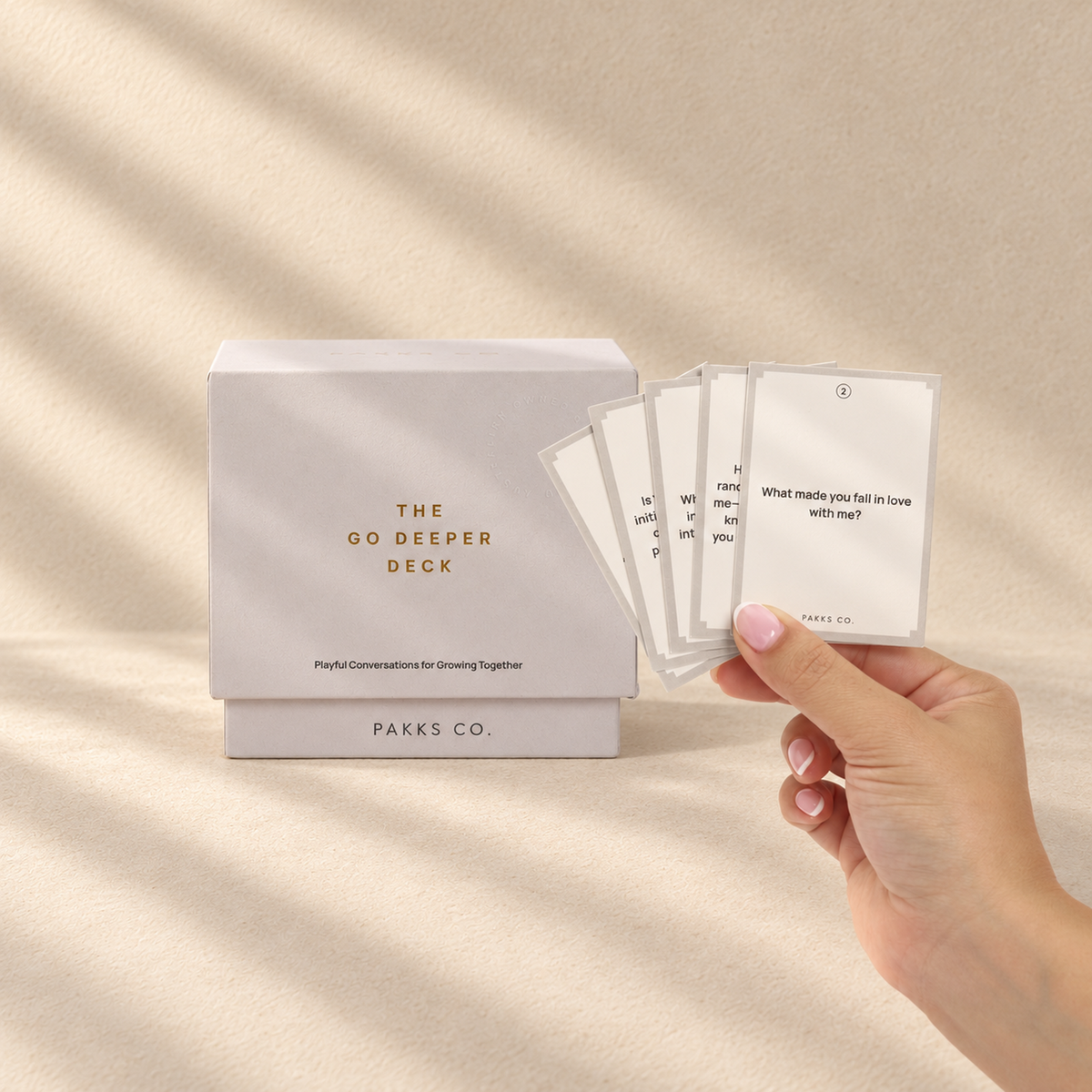
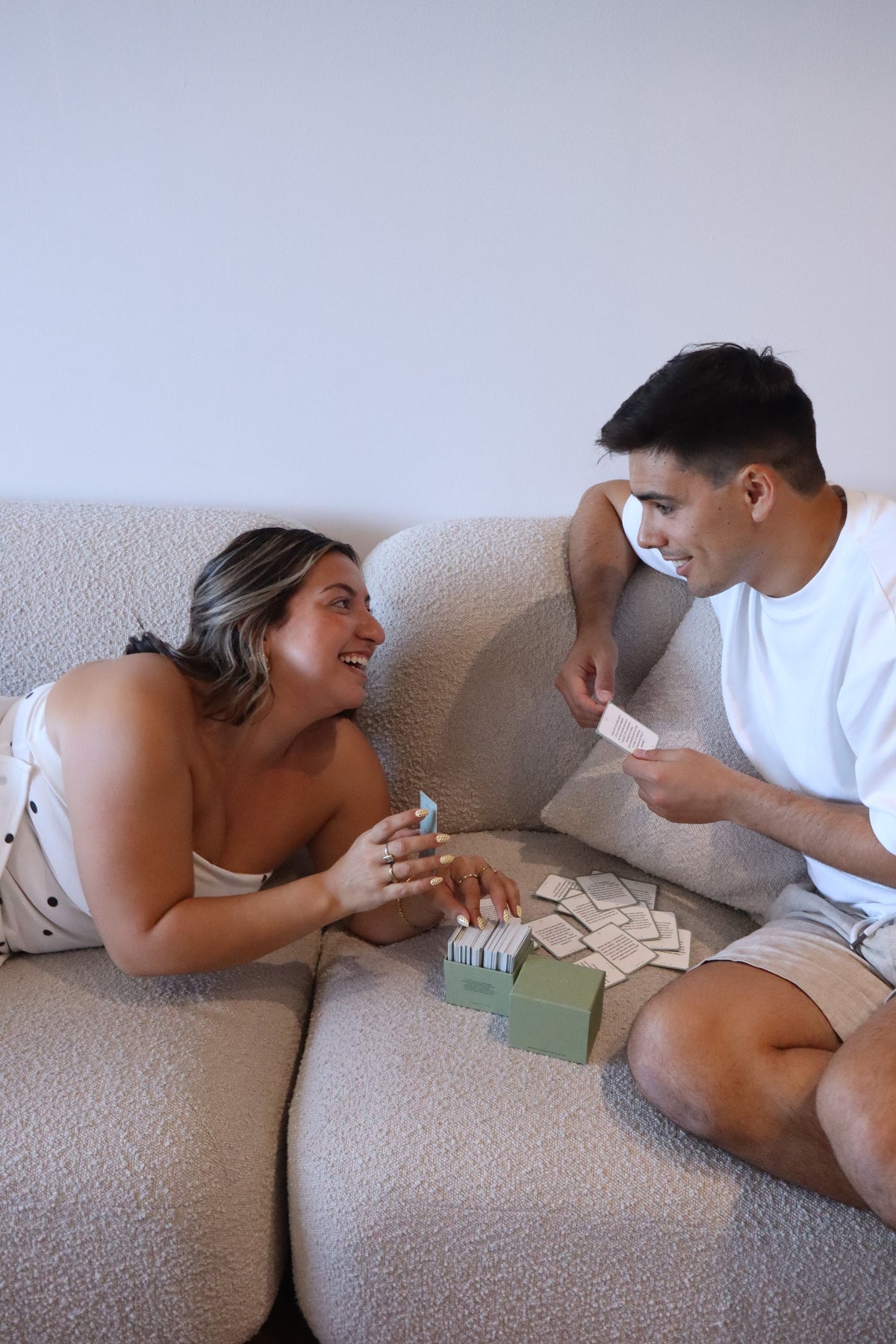
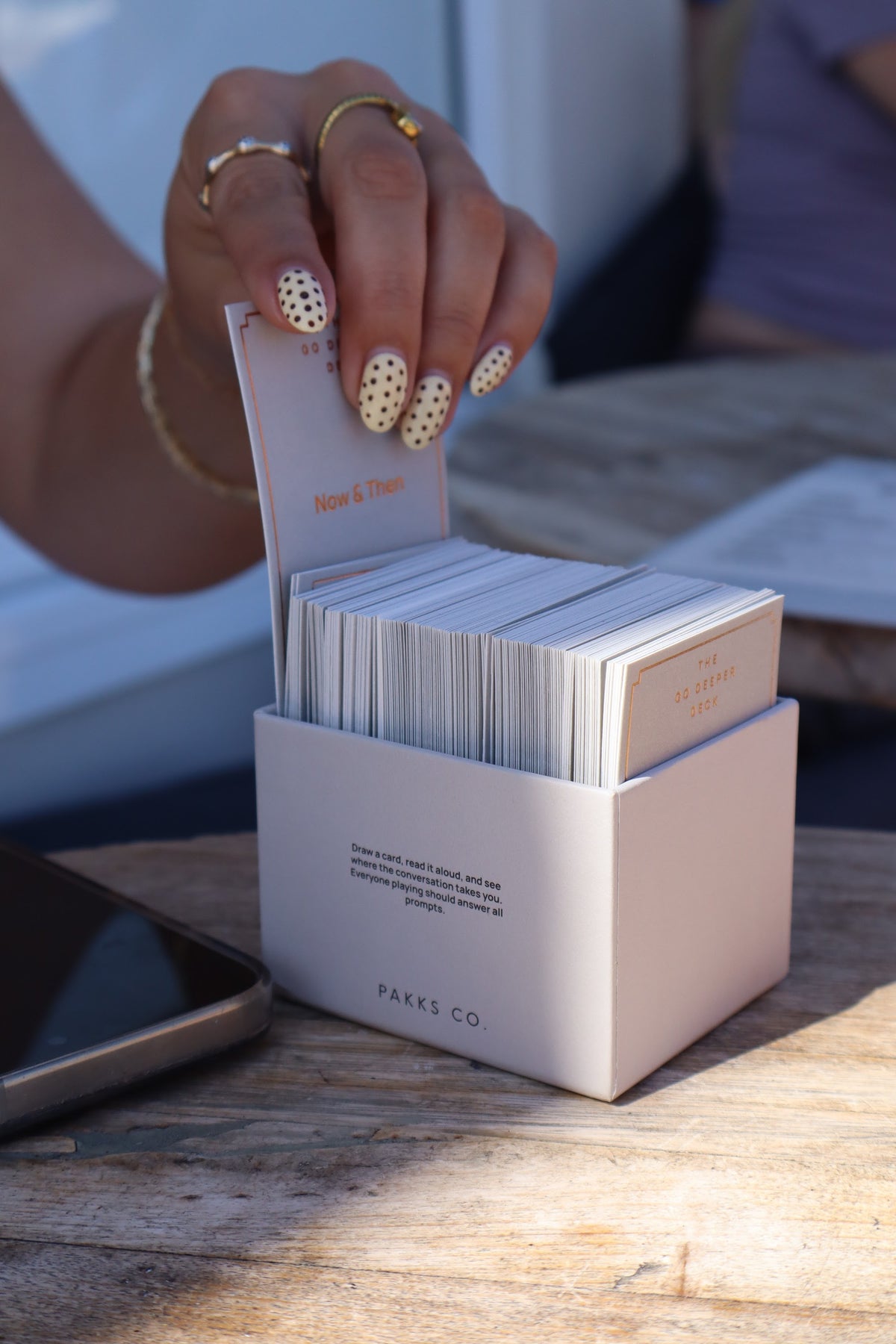
If you'd like prompts that get you both talking, I make the Go Deeper Deck for long-term couples who want to stay curious. Each Pakks deck has 150 questions in 3 categories, backed by psychology and research. For more ideas that need no cards at all, we've written about how to communicate better in your relationship and what to do when there's nothing to talk about with your partner.
Frequently asked questions
In this study it meant understanding and sharing your partner's feelings, and it had two parts. One is perspective-taking, which is trying to see things from their side. The other is empathic concern, which is feeling warmth and worry when they're struggling.
The 2026 study of 190 couples found that more empathetic people reported more satisfying sex, and so did their partners. It measured people once, so it can't show that empathy caused that. The link was small to moderate.
Say their side back to them before you respond, and ask if you got it right. You can still disagree afterwards. Showing that you understood the position is a separate step from agreeing with it.